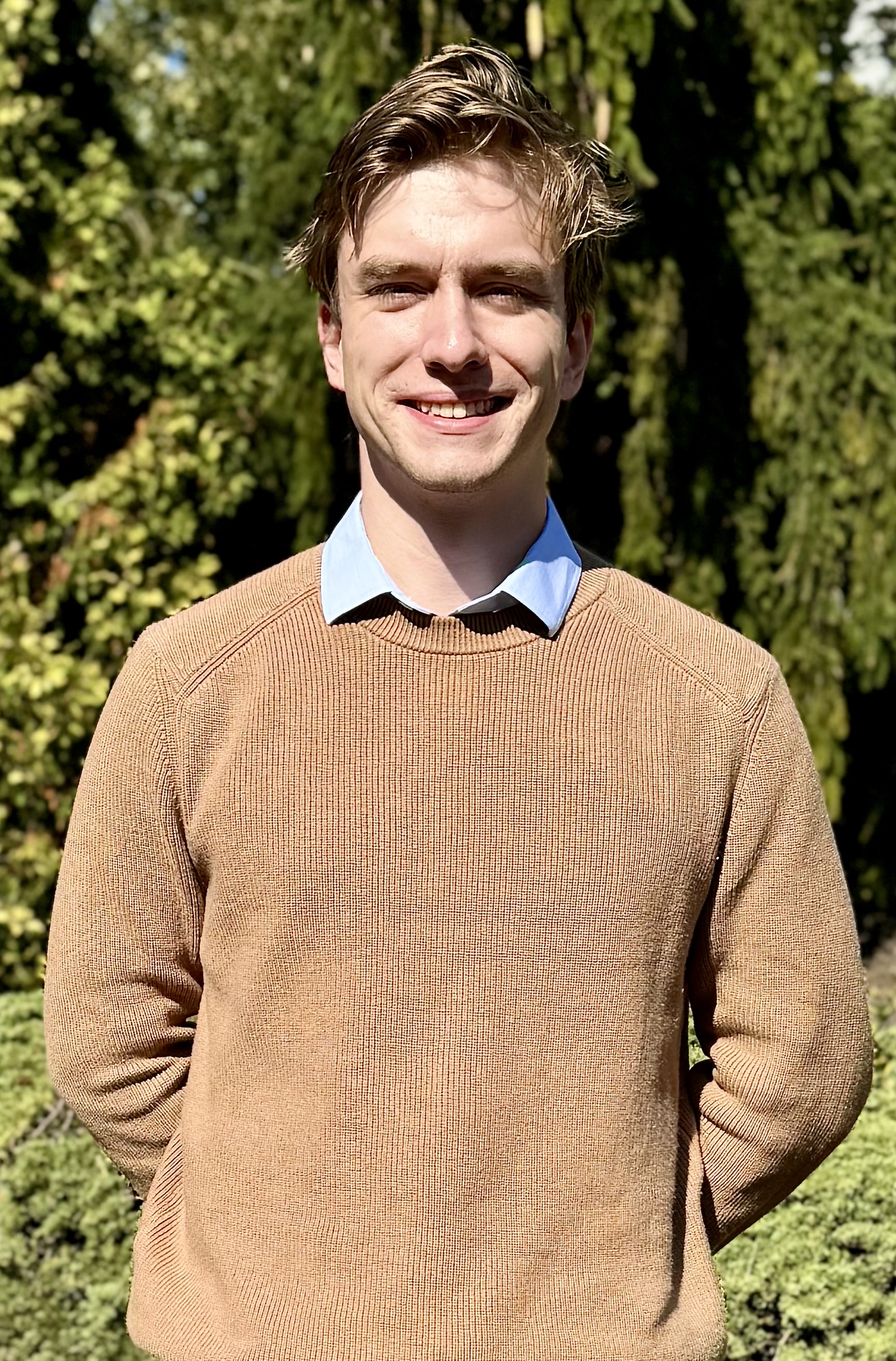
D. Eric Belleville, Jr.
The Ohio State University
I am a PhD candidate in the Department of Agricultural, Environmental, and Development Economics (AEDE) at The Ohio State University, advised by Brian Roe. My research studies how environmental buyback and retirement programs can be designed to change the behavior of producers and resource owners, using structural and spatial methods alongside laboratory experiments. I work across conservation contracts, land retirement, and common-pool resource buybacks, focusing on how spatial spillovers shape participation and cost-effectiveness.
I am on the 2026–27 job market.
Fields: Environmental & Resource Economics · Mechanism Design · Experimental Economics · Spatial Econometrics
Research
How Spillovers Erode Participation in Conservation Buybacks: Evidence from the Texas Inshore Shrimp Fishery
Buyback programs meant to reduce overcapitalization can undercut their own progress: as capacity is removed, the agents who remain gain a less crowded resource and grow less willing to exit. Using the Texas inshore shrimp license buyback over 26 years, I estimate a two-stage structural model and find that for every seven active bidders, roughly one holds out as stock recovery makes staying more valuable. Because about three-quarters of retired licenses were already inactive, targeting matters: at the same budget, restricting purchases to active licenses would have retired 136 more trawl-days per license.
I quantify this feedback-loop using the Texas Parks and Wildlife Department's 26-year inshore shrimp license buyback as a testbed. I estimate a two-stage structural model of vessels' spatial fishing choices and license-retirement decisions, then use it to simulate continuation values and reconstruct harvest and auction activity when vessel-level data are unavailable. I find that for every seven active license-holders who bid, roughly one who would otherwise have participated holds out as stock recovery makes staying more valuable. Program effectiveness is further constrained by two margins: approximately three-quarters of retired licenses were already inactive, and surviving vessels replace more of the retired effort in denser bay systems. At the same budget, restricting purchases to active licenses would have retired 136 more trawl-days per license. Together, the results show that conservation buybacks can undermine participation and additionality through the benefits they create for those who remain.
Strategic Delay, Signaling, and Risk Preferences in Agglomeration Bonus Mechanisms
I test how these mechanisms interact in a laboratory experiment in which participants decide whether to make an irreversible commitment to a group-dependent payoff. The design exogenously varies the visibility of peers' past choices and independently elicits risk preferences. Time-to-adoption estimates show that observed peer adoption substantially accelerates uptake: each additional accumulated observed adoption shortens time to adoption by 0.5–1.7 percent. Risk preferences significantly delay adoption, but only under a higher-stakes payoff structure. A simulation combining these estimates suggests that expanding peer visibility yields program benefits equivalent to roughly 0.2 additional adopters per participant at empirically documented risk aversion levels. Together, the results highlight the importance of information design for agglomeration bonus schemes, and suggest that peer visibility yields the greatest returns in populations facing higher-stakes, irreversible participation decisions.
Endogenous Entry and Bid Behavior in Common-Pool Resource Buyback Auctions
Building on the structural framework of my job market paper, this project models bidding and endogenous entry directly, drawing on the auction-theoretic literature on entry into procurement and buyback mechanisms. The goal is a mechanism-design treatment of how program rules shape who bids, how they bid, and the resulting efficiency of capacity retirement.
Publications
- Belleville Jr, D. E., Jolley, G. J., Bone, C., & Gomez, D. (2025). "Universal Basic Income in Appalachia: A Strategy for Clean Energy Transition?" Basic Income Studies, 20(2), 151–166.
- Pham, T., Khalaf, C., Jolley, G. J., & Belleville Jr, D. E. (2024). "Hollowing Out of Middle-Pay Jobs in Ohio: An Exploratory Analysis." American Journal of Economics and Sociology, 83(2), 427–443.
- Michaud, G., Riley, J., Jolley, G. J., & Belleville Jr, D. E. (2022). "Industry Survey of Wood Waste Markets in Ohio." International Wood Products Journal, 13(2), 91–98.
- Belleville Jr, D. E. & Jolley, G. J. (2022). "Estimating Cultural Heritage Sites Effect on Food and Accommodations with Synthetic Controls." Annals of Tourism Research Empirical Insights, 3(1), 100045.
- Jolley, G. J. & Belleville Jr, D. E. (2021). "Economic Impact of Ohio Foundation of Independent Colleges (OFIC)." The Ohio Foundation of Independent Colleges, Ohio.
- Jolley, G. J., Khalaf, C., Michaud, G. L., & Belleville Jr, D. E. (2020). "The Economic Contribution of Logging, Forestry, Pulp & Paper Mills, and Paper Products: A 50-State Analysis." Forest Policy and Economics, 115, 102140.
- Belleville Jr, D. E., Cebula, R. J., Jolley, G. J., & Bone, C. (2020). "COVID-19-Related Jock Tax Revenue Losses in US States." Regional Studies, Regional Science, 7(1), 428–430.
Teaching
AEDE 2005: Data Analysis for Agribusiness and Applied Economics
Designed original exam materials; facilitated group project-focused office hours; led lab sessions on applied data analysis methods.
AEDE 4002: Analytics for Agribusiness and Applied Economics
Led weekly lab sessions; developed interactive materials and Excel-based assignments.
AEDE 4330: Sustainable Economy: Concepts and Methods
Assisted in course management; coordinated with faculty on assessment design; designed and graded assignments emphasizing empirical applications of sustainability metrics.
Awards & Honors
- Farm Foundation Agricultural Scholars Program (USDA ERS & Farm Foundation), 2026
- Bernie Erven Graduate Teaching Award, AEDE, The Ohio State University, 2026
- George and Florence McGhee Memorial Scholarship, 2026
Curriculum Vitae
Download my full CV for additional details on research, teaching, and professional experience.
Download CV (PDF)